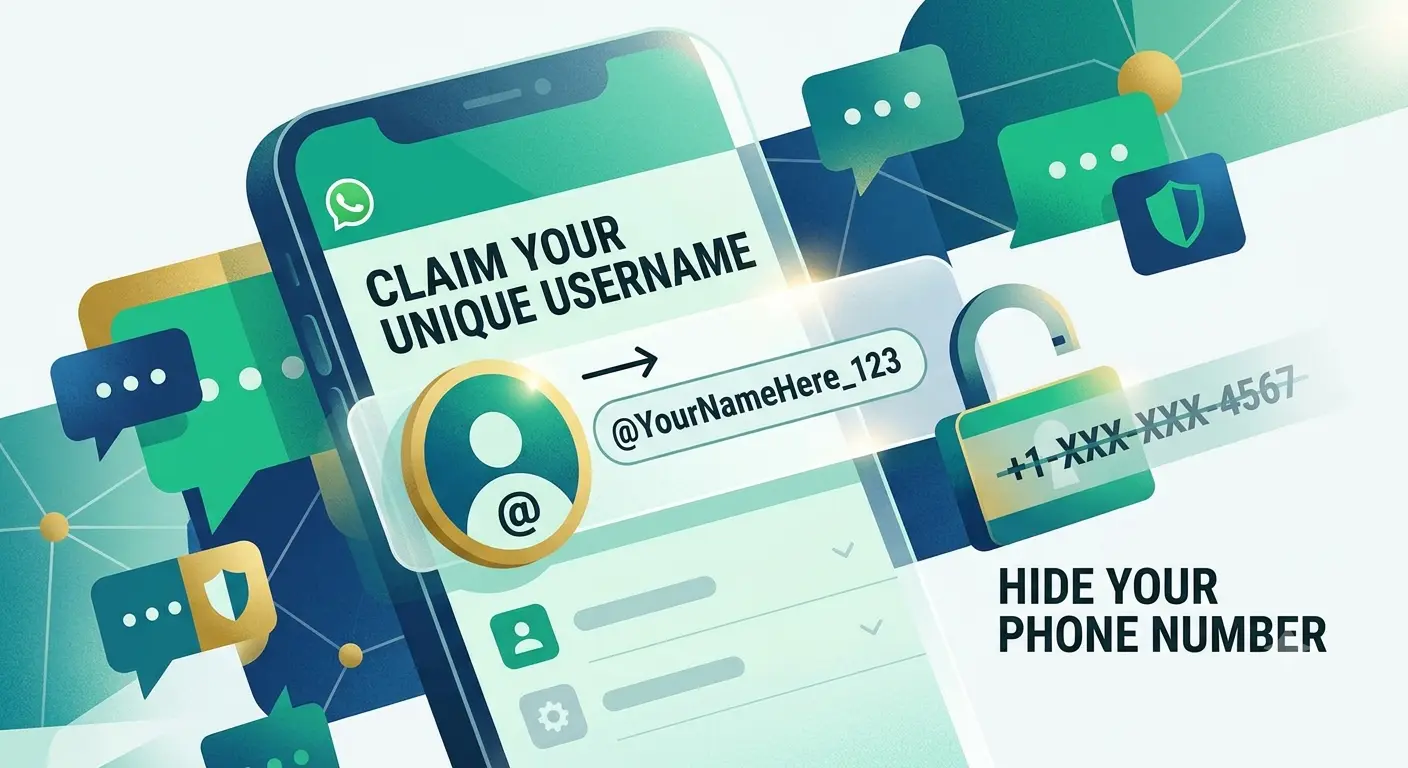
For as long as WhatsApp has existed, your phone number has been your identity on the app, the thing you had to hand over to anyone who wanted to message you, whether it was a close friend or someone you just met once. That’s finally changing. WhatsApp announced this week that users can now reserve a username, ahead of a fuller rollout later this year that will let people connect without ever sharing their phone number.
What’s Actually Rolling Out
Starting this week, WhatsApp users can go to Settings > Account > Username and claim a handle between 3 and 35 characters long. The reservation is opening early specifically because WhatsApp has over three billion users worldwide, and the company wants to give people a real shot at securing the username they actually want before duplicates become unavoidable at that scale.
This is a reservation, not the full feature launch. WhatsApp says usernames will become usable gradually over the coming months, with users getting an in-app notification once it’s live in their country. One detail worth knowing if you’ve built any presence on Meta’s other apps: creators, small businesses, and organizations can claim their existing Instagram or Facebook username on WhatsApp too, for consistency across platforms.
Why This Is Different From Instagram or Telegram Usernames
WhatsApp is being explicit that this isn’t being built like a typical social media handle system, and the differences matter for privacy: there’s no public directory and no search suggestions. Unlike Instagram, where you can search a name and find a profile, someone needs to know your exact WhatsApp username to contact you for the first time, nothing about it is discoverable by browsing or guessing.
For an extra layer of protection, WhatsApp is also introducing an optional username key, a verification code that, if you enable it, anyone trying to message you for the first time must also know, on top of your username itself.
Explaining the reasoning, WhatsApp’s VP and Head of Product Alice Newton-Rex put it simply: sharing a phone number with someone new, a classmate, a neighbor, someone you just met, can feel like a bigger step than it should, since a phone number is personal and tied to so many other parts of your life. A username gives people a way to connect without that exposure.
What Stays the Same
Worth being clear about the limits here: WhatsApp will still require a phone number to actually create an account in the first place. Usernames are an additional, optional identity layer on top of that not a replacement for phone-based account creation. You can also turn the feature off or change your username at any point, so this isn’t a one-way, permanent commitment.
Why This Matters Beyond Just Privacy
This puts WhatsApp roughly in line with where rivals like Telegram, Signal, and Wire have already been for years both have offered username-based identity for some time, so this closes a real, long-standing gap. It’s also part of a broader industry shift away from phone numbers as the default way platforms identify users, a trend worth watching if you work in product, identity, or trust-and-safety roles phone-number-based identity is increasingly seen as both a privacy liability and an outdated default, and username/handle-based systems are becoming the norm across major platforms rather than the exception.
Frequently Asked Questions
Yes, reservation has opened via Settings > Account > Username, though the rollout may take a few days to fully reach all devices, and full usability of usernames is expected gradually over the coming months.
No, WhatsApp has confirmed there is no public username directory or search functionality. Someone needs to know your exact username to contact you for the first time.
Yes, a phone number is still required to create a WhatsApp account. Usernames are an additional, optional way to be contacted, not a replacement for account creation.
Yes, businesses and organizations can reserve usernames, including matching their existing Instagram or Facebook handles for consistent branding across Meta’s platforms.
Sources: TechCrunch, Gulf Business, Qatar News Agency, and 9to5Google, June 2026.